Industrial Kitchen
An industrial kitchen is designed for efficient, hygienic food production in hotels, restaurants and cafés. Choosing professional kitchen equipment, planning workflows and using stainless steel solutions help businesses improve productivity and maintain consistent quality. Explore industrial kitchen essentials with Ekmekçiler, discover key equipment categories and learn how thoughtful kitchen planning supports your daily operations.
A successful commercial kitchen starts with the right equipment and a well-planned workflow. Whether you are opening a new business or upgrading an existing kitchen, look beyond equipment prices. Considering your menu, peak service demand and available space together helps you create a more functional kitchen.
What is a commercial kitchen?
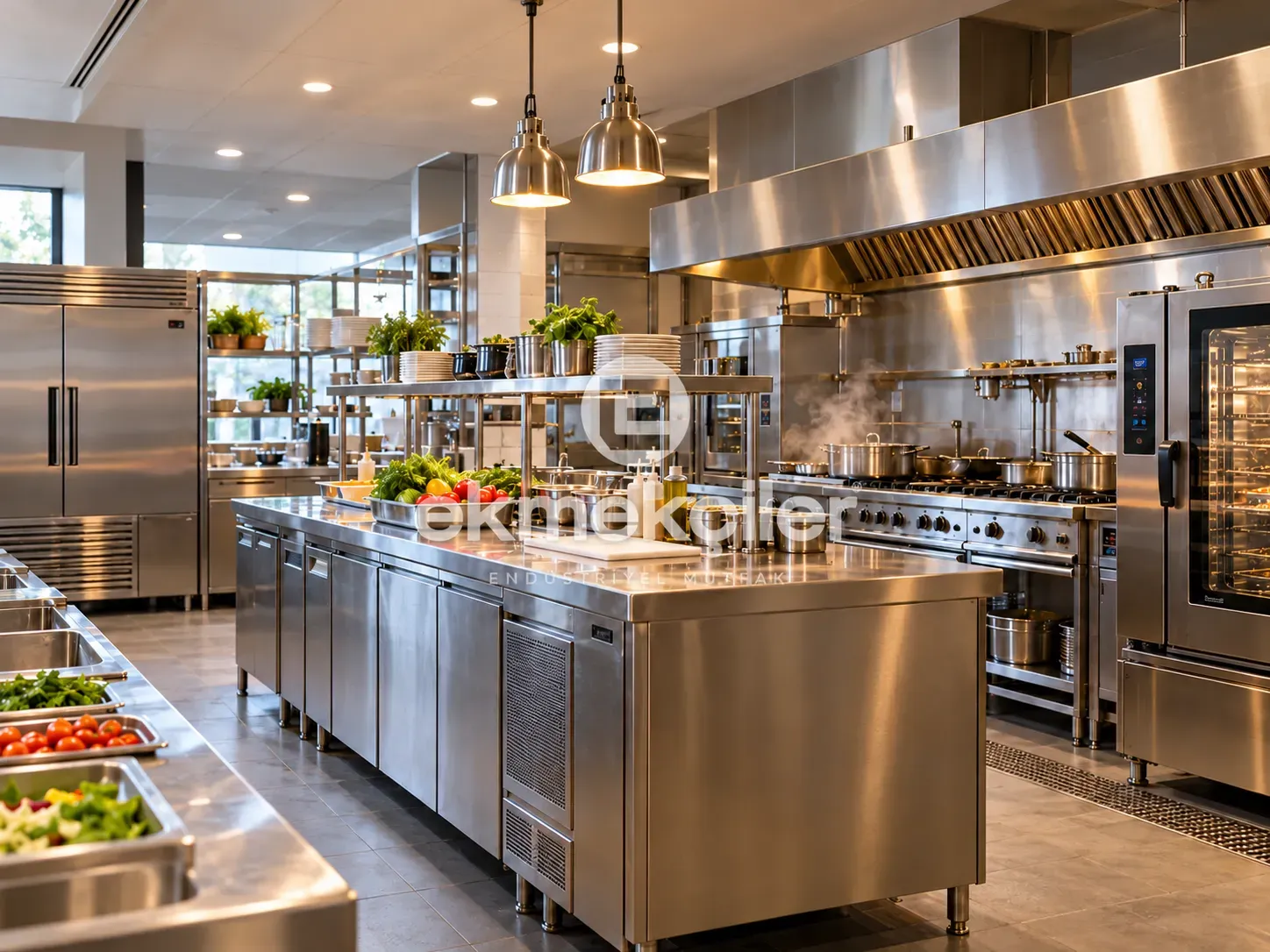
A commercial kitchen, also known as an industrial kitchen, is a workspace designed for professional food production in restaurants, hotels, cafés and catering operations. It brings together food preparation, cooking, refrigeration, service and dishwashing. Unlike a domestic kitchen, it is planned around intensive use and the production capacity of the business.
Size alone does not determine how well a professional kitchen performs. In a small café, the layout behind the counter may be crucial, while a large hotel needs to coordinate several service points. Your equipment requirements should therefore reflect how your business operates each day.
Which questions should guide your kitchen project?
Clarifying these four areas before researching equipment can help reduce unnecessary purchases and avoid layout changes later.
What will you prepare?
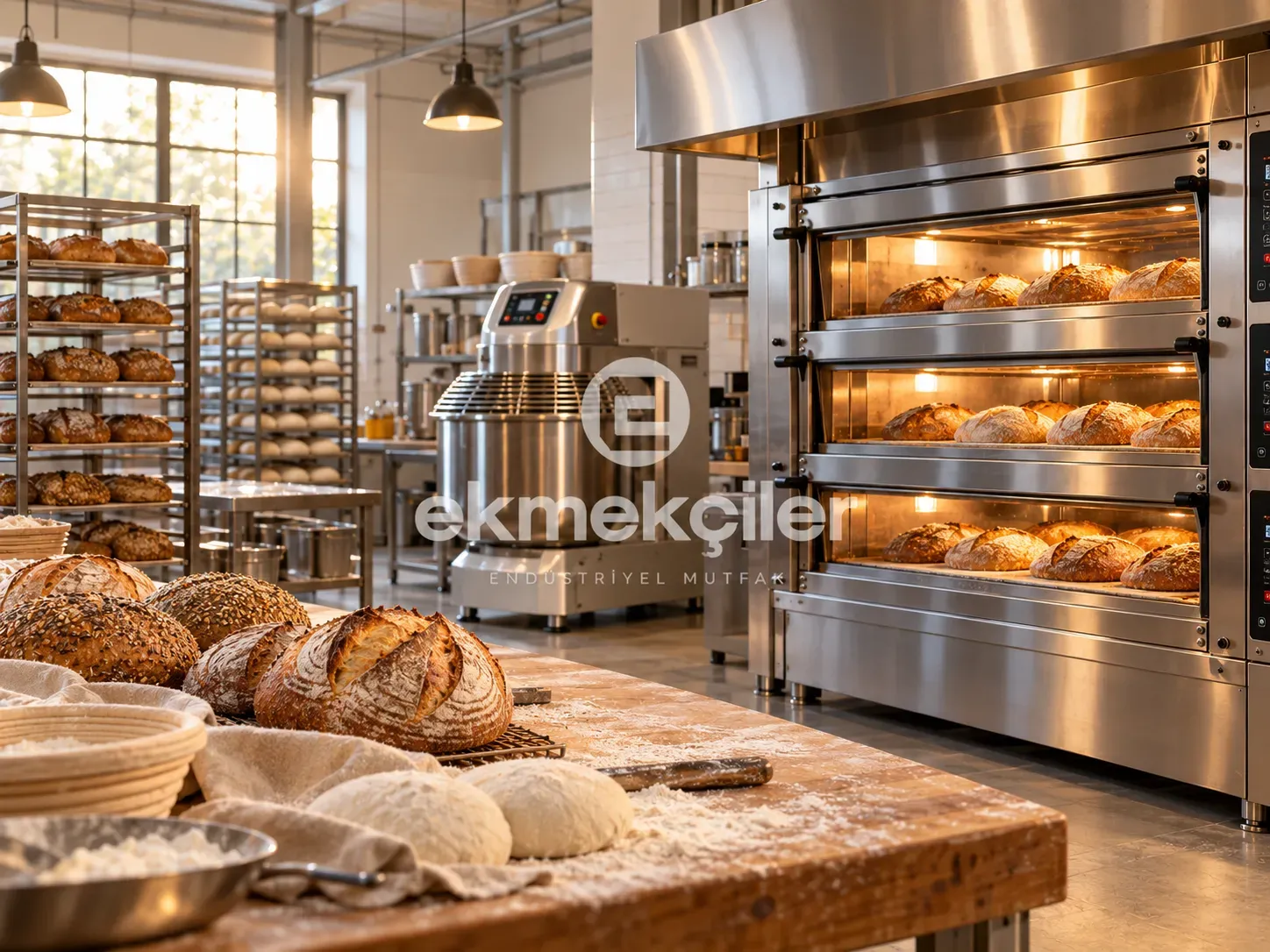
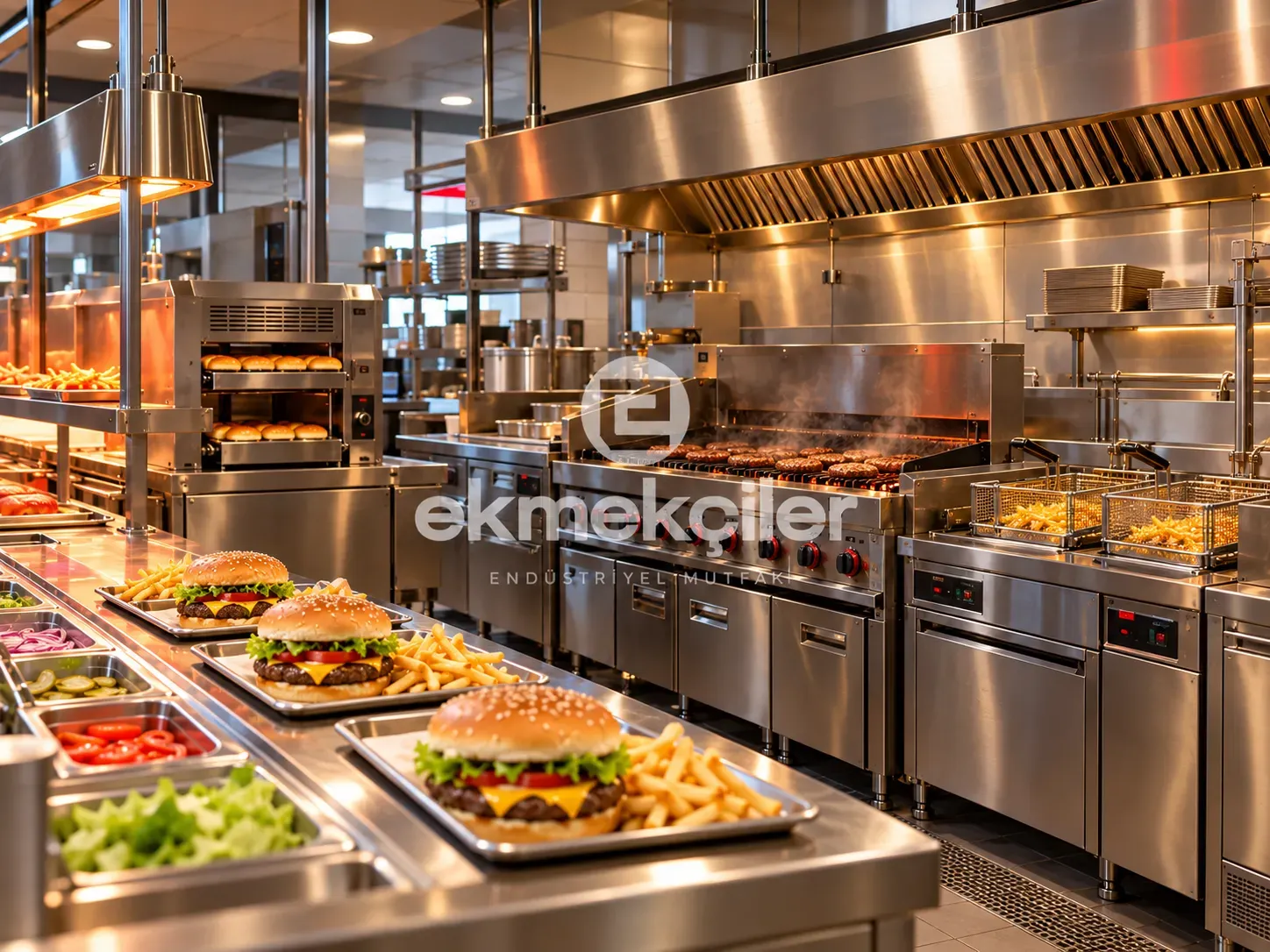
A grill-focused restaurant and a business specialising in baked products need different equipment. List the preparation, cooking and holding stages for each item on your menu.
How many orders will you serve at peak times?
Your total daily customer count is only part of the picture. The number of orders arriving within the same period matters too. Assess equipment capacity against your busiest service hours.
How much usable workspace do you have?
Allow for more than equipment dimensions. Include door opening clearances, staff circulation, cleaning access and maintenance space in your layout.
Can your premises support the equipment?
Check electrical capacity, gas connections, water supply, drainage and ventilation before placing an order. Existing utilities can directly influence your equipment choices.
How should you choose commercial kitchen equipment?
Think of your equipment as an integrated system rather than a collection of individual appliances. Time saved during preparation should not be lost at the cooking line, and service capacity needs to keep pace with production. Start by exploring the product groups in our commercial kitchen equipment category.
| Work area | Selection priorities |
|---|---|
| Preparation | Worktop space, processing volume and comfortable movement for staff. |
| Cooking | Technology suited to the menu, portion capacity and ease of use during service. |
| Refrigeration | Product types, delivery frequency and required storage capacity. |
| Dishwashing | Peak volumes of plates, glasses and utensils, with separate clean and dirty flows. |
| Service | Presentation style, number of service points and transport distances. |
Let your menu shape the cooking line
When selecting professional cooking equipment such as ranges, grills and fryers, consider which dishes need to be prepared simultaneously. Several stations waiting for the same appliance can slow service. Allocating space and budget to capacity you will not use is also inefficient.
Tray dimensions, product variety and batch sizes can help you choose between commercial ovens . Alongside the appliance footprint, allow space for moving and holding trays.
How do priorities vary by business type?
In a café kitchen, beverage preparation, small-batch production and counter workflow take priority. A restaurant kitchen needs to coordinate different dishes so that orders are ready together. A hotel kitchen must plan breakfast, restaurant and event service schedules as a whole. In a catering kitchen, production batches, transport and distribution are key parts of the plan.
These differences mean there is no single equipment list that suits every business. Preparing a sample weekly menu and an estimated order breakdown for a busy service day makes planning discussions more productive.
Look beyond appliance prices when budgeting
Commercial kitchen costs vary with the number of appliances, capacity, technical specifications and project scope. For a meaningful comparison, ask suppliers to quote against the same requirements.
- Clarify the scope: Ask whether delivery, installation, utility connections and commissioning are included in the quotation.
- Separate utility works: Identify electrical, gas, water, drainage and ventilation costs separately from the equipment budget.
- Consider operating costs: Compare consumption figures under similar capacity and operating conditions.
- Request a delivery schedule: Coordinate equipment delivery and installation with the date your premises will be ready.
Explore completed Ekmekçiler projects
Ekmekçiler has provided professional kitchen equipment and kitchen planning solutions since 1974. Explore projects by our İzmir-based team to help identify the requirements you would like to discuss for your own business.
Casual Coffee
Take a look at this completed project as you prepare for your own café kitchen.
Explore the Casual Coffee Göztepe project →Bolulu Hasan Usta
Browse the project gallery as you assess your business requirements.
Explore the Bolulu Hasan Usta Balçova Kipa project →Frequently asked questions about commercial kitchens
Do small businesses need professional kitchen planning?
Yes. In a limited space, circulation, storage and the sequence of equipment use become even more important. Planning helps you make use of the available space according to your menu.
What information should I prepare for a quotation?
Your business type, menu, estimated service capacity, premises dimensions and existing utility details are useful starting points. If available, share a measured floor plan and a list of equipment you intend to keep.
Can an existing kitchen be improved without a complete renovation?
Phased improvements may be possible after reviewing existing equipment and workflow. Start by identifying production bottlenecks, then assess how proposed changes would affect utilities and the kitchen layout.
Photo Gallery